Fungal forests!
Here's some beautiful, up-close-and-personal time-lapse photography of fungal growth! It's so freaking beautiful!
These fungi appear to be typical bread molds in the fungal phylum Zygomycota.
Those tall stalks that create the Dr. Seuss-like trees are fruiting bodies and the balls on the tops are the sporangia which house hundreds of tiny spores.
Those spores will eventually be released into the air and will find their way to a tomato or loaf of bread in your kitchen to start a new mold
You're probably breathing in some of those spores right now, actually...
Did you see the fungus mites?! They're like the cattle of the microscopic world of mycelium and hyphae!
To learn more, check out our friends at The Artful Amoeba or you could always try Wikipedia!
Wednesday, June 22, 2011

Tuesday, June 21, 2011
Random Thought of the Day
To say this tree has had an epic life would be quite an understatement.

It's sad we had to end it. Probably could have lived another few hundred years!
Courtesy of our friends over at the Proceedings of the Ever So Strange.

It's sad we had to end it. Probably could have lived another few hundred years!
Courtesy of our friends over at the Proceedings of the Ever So Strange.
Sunday, June 12, 2011
Random Thought of the Day
Who knew mosquitoes could be so pretty?!

These guys are found in the forests of Central and South America.

Apparently, the furry parts on their legs and their shimmery complexion are sexually selected traits and the males perform complex dances to win over the ladies.
 |
| Sabethes mosquito is actually from the planet Pandora... |

These guys are found in the forests of Central and South America.
Apparently, the furry parts on their legs and their shimmery complexion are sexually selected traits and the males perform complex dances to win over the ladies.
Saturday, June 11, 2011
Random Thought of the Day
The Cassini mission was pretty kick-ass.
In the 80s, NASA and the ESA decided they wanted to take pretty pictures of Saturn.
So they did.
It was pretty bomb. And about $3.5 billion later, we have this sweet movie!
Oh also, they made some major contributions to space science such as making the first landing in the outer solar system, developing the most complex interplanetary probe to date, and determining the composition of structure of Saturn's rings.
Science Rules.
In the 80s, NASA and the ESA decided they wanted to take pretty pictures of Saturn.
So they did.
It was pretty bomb. And about $3.5 billion later, we have this sweet movie!
CASSINI MISSION from Chris Abbas on Vimeo.
Oh also, they made some major contributions to space science such as making the first landing in the outer solar system, developing the most complex interplanetary probe to date, and determining the composition of structure of Saturn's rings.
Science Rules.
Thursday, June 2, 2011
Plant Porn!
It's that time of year again...
It's that time of year when millions of organisms begin exposing their sexual structures to the world, releasing trillions upon trillions of male gametes into the environment!
And yes, that means it's time for hay fever and terrible allergies!
Plants all around Washington are blooming like crazy!
And of course, I took plenty of photos!
It's that time of year when millions of organisms begin exposing their sexual structures to the world, releasing trillions upon trillions of male gametes into the environment!
And yes, that means it's time for hay fever and terrible allergies!
Plants all around Washington are blooming like crazy!
And of course, I took plenty of photos!
 |
| Glacier Lilly (Erythronium grandiflorum) Check out those dangling anthers! Scandalous! |
 |
| Pacific Trillium (Trillium ovatum) |
 |
| Ballhead Waterleaf (Hydrophyllum capitatum) So many anthers! That's why it's called a Ballhead... |
 |
| Vanilla Leaf (Achyls triphylla) |
 |
| Pacific Bleeding-Heart (Disentra formosa) |
 |
| Calypso Orchid (Calypso bulbosa) |
 |
| Common Vetch (Vicia sativa) |
 |
| Tiny Vetch (Vicia hirsuta) It's such a little vetch! |
 |
| Bicolor Lupin (Lupinus bicolor) |
 |
| Large-flowered Triteleia (Triteleia grandiflora) They look like they're ready to explode! |
 |
| Death Camas (Zigadenus venenosus) |
 |
| Spotted Coralroot (Corallorhiza maculata) It's an orchid! |
 |
| Three-leaf Foamflower (Tiarella trifoliata) |
 |
| Herbal Speedwell (Veronica officinalis) |
 |
| Another Calypso Orchid (Calypso bulbosa) Also known as a Fairy Slipper |
 |
| Here's some Seashore Lupin (Lupinus littoralis) and blooming Common Sheep Sorrel (Rumex acetocella) |
 |
| Heart-leaf Twayblade (Listera cordata) A very tiny orchid! |
 |
| Seablush (Plectritis congesta) So cute and tiny! |
Wednesday, June 1, 2011
Back from San Juan!
So, I recently got back from San Juan Island where I counted all the birds living in the two National Parks located there.
I took a lot of photos...
Took these photos using my binoculars.
Yup. I'm a badass like that.
More photos to come!
I took a lot of photos...
 |
| Lots of Savannah Sparrows |
 |
| Also plenty of White-Crowned Sparrows |
 |
| And even more foxes... Actually, these are probably the three most common vertebrates on the Island (along with deer of course, but they're no fun to photograph). |
Took these photos using my binoculars.
Yup. I'm a badass like that.
More photos to come!
Monday, May 23, 2011
The San Juans
In a few hours I will be leaving to the San Juan Archipelago to survey the entire island of San Juan.
That's a lot of birds.
We separate the island into two halves - the American Camp and the British Camp.
I was curious as to why the island is separated this way, so I did a bit of research (i.e. Wiki search!)...
The Oregon Treaty of 1846 established the 49th parallel as the official boundary between the US and British North America, but made no mention of the San Juan Archipelago...

So of course, the British (Canada was officially a British federal dominion until 1982...) and the Americans both claimed ownership over the San Juans...
The conflict escalated in 1859 when an American shot and killed an Irishman's pig while it was eating his potatoes (which is NOT meant to be an insulting innuendo for Irish wives). This escalated to military action and two months later, 461 Americans with 14 cannons were opposed by five British warships mounting 70 guns and carrying 2,140 men...

No shots were fired. The pig was the only fatality...
For 12 years, the two nations maintained a strong military presence on San Juan with the British in a camp to the north and the Americans in a camp to the south.
Apparently it was a very drunken 12 years for the soldiers (together they celebrated every British and American holiday possible...).

The Union Jack is still raised by park rangers every day over the British Camp, making it one of very few places in the US where government employees regularly raise the flag of another country.
Oh yes, and there are birds.
 |
| Yeah, I know you're jealous |
That's a lot of birds.
We separate the island into two halves - the American Camp and the British Camp.
I was curious as to why the island is separated this way, so I did a bit of research (i.e. Wiki search!)...
The Oregon Treaty of 1846 established the 49th parallel as the official boundary between the US and British North America, but made no mention of the San Juan Archipelago...
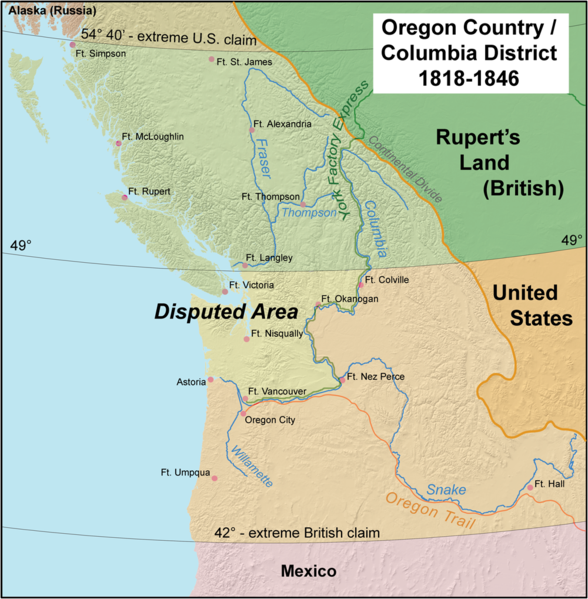
So of course, the British (Canada was officially a British federal dominion until 1982...) and the Americans both claimed ownership over the San Juans...
The conflict escalated in 1859 when an American shot and killed an Irishman's pig while it was eating his potatoes (which is NOT meant to be an insulting innuendo for Irish wives). This escalated to military action and two months later, 461 Americans with 14 cannons were opposed by five British warships mounting 70 guns and carrying 2,140 men...
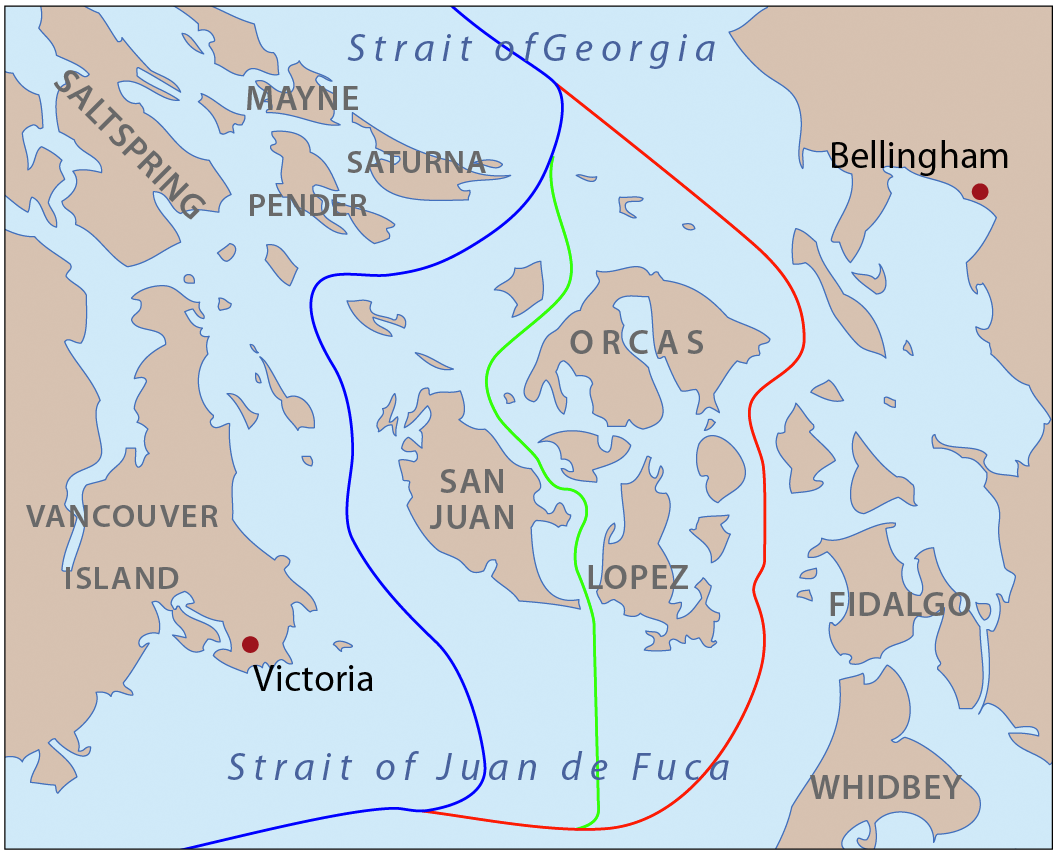
No shots were fired. The pig was the only fatality...
For 12 years, the two nations maintained a strong military presence on San Juan with the British in a camp to the north and the Americans in a camp to the south.
Apparently it was a very drunken 12 years for the soldiers (together they celebrated every British and American holiday possible...).

The Union Jack is still raised by park rangers every day over the British Camp, making it one of very few places in the US where government employees regularly raise the flag of another country.
Oh yes, and there are birds.
 |
| Passerculus sandwichensis No joke. That's its scientific name. The Savannah Sparrow |
Subscribe to:
Posts (Atom)