
Monday, September 20, 2010

The Power of Words
This has been on my mind for the past few weeks now and it has been drastically changing my outlook on everything that I think and do. (If you'd rather not read this entire thing, you can just skip to the end...)

Words are extremely powerful. But not in the way I know you're thinking. Not in the sense that Obama's speeches are powerful or the words of the Bible are powerful. A single word is powerful simply by existing.
Here's an extremely simple example. Does an abstract thing such as an "idea" even exist if we don't have a word for talking/thinking about it? Think about that for a second.
Now extrapolate this idea to encompass this entire internal conversation you are having with me. What if we didn't have a word for ideas? or thinking? or thinking about what someone else is thinking? We would be completely incapable of having this internal dialogue. Not only would we be unable to physically converse about this (face to face, verbally), but you would be unable to THINK about it. You would not be able to COMPREHEND this idea.
Do you understand? No?
Ok, here's another example:
In the 1970s, Nicaragua created the country's first clinic for the deaf and mute. Before this time, deaf people in Nicaragua had no standard form of communication. After the creation of this clinic, a small group of Nicaraguans INVENTED their own form of sign language. The first version of this language only had two words for thinking about other people's thoughts. Today, new children are learning this form of sign language and have invented new words. This new generation of signers has seven signs for thinking about other people's thoughts.
Researchers gave these two generations of signers a simple test to quantify their ability to think about other people's thoughts. The researchers gave each subject a comic strip showing a boy playing with a train set. The boy's little sister wants to play with the train too but her brother won't share. Then the boy packs up the train set, puts it into the toy chest and leaves the room. Once he is gone, the little sister sneaks into the room, takes the train out of the chest and hides it under the bed. When the boy gets back to the room, the researchers ask the subject (in sign, of course), "Where will the little boy look to find his train set?"
The first generation of signers (with only 2 words for thinking about other people's thoughts) all answered, "He will look under the bed, of course." The new generation of signers (with 7 words for thinking about other people's thoughts) all answered, "He will look in the toy chest because he thinks that the train is still there."
Clearly, we can understand that the little boy THINKS his train is in the chest. People without words for thinking about other people's thoughts are actually INCAPABLE of thinking about other people's thoughts.
Without a word for it, we cannot comprehend it! Wait a second. If we cannot comprehend it, does it even exist?
Listen to the whole story courtesy of Radiolab!!!
Wait, think about this for a moment: What if we didn't have language...
Would we even be capable of thought?
Scientists have researched this, of course. And no, without language -- without words -- we are incapable of thought.
In the most recent episode of Radiolab, researchers in Nicaragua discovered a perfectly intelligent man who had lived his entire life without any form of language. Imagine living 27 years without language or "thought." No, you can't. Is it really possible for us to think about what it's like not to think? RadioLab discusses it here:
Maybe it IS possible to understand what it's like not to have language. RadioLab interviewed a neurologist who had a stroke that slowly caused her to lose language. She describes her experience and what it felt like to be incapable of thought here:
Ok. If you made it through that whole post and still understand what's going on, you are pretty much amazing. If you would rather not read everything you can just listen to the whole RadioLab broadcast HERE!
It pretty much changed my life. No joke.
Sunday, September 19, 2010
Look Around You
It's time to learn about...
Maths!
Note the very scientific calculator with "Stun" mode. I want one.
Maths!
Note the very scientific calculator with "Stun" mode. I want one.
Friday, September 17, 2010
Whoa! Diatom Madness!!!
Do you know what a Diatom is? Of course you do, but here's a short review just in case you forgot.
Diatoms are these cute little aquatic, single-celled, algae-like phytoplanktons. They photosynthesize, making food from sunlight and producing oxygen from carbon dioxide. Instead of constructing cell walls from cellulose or phospholipids like plants and animals, they make cell walls out of silica -- glass! This little glass house is called a frustule. Each frustules is distinct for each species of diatom, and when the diatom dies and decomposes, its silica house remains.
Check it out!

This is a dead diatom called Actinocyclus.
Here's one that is still alive!

But that's not the best part. There are some people who like diatoms so much they will PAY people to collect them and arrange them into pretty little shapes...

And some of these shapes get completely crazy


Wait, it gets better!


This last one is from the late 19th century when collectors first started commissioning and paying people for little arrangements of these single-celled plankton. This one actually has butterfly scales in it as well.
Isn't that crazy?! For Elements this year, I am planning on making an attempt at constructing my own diatom image. I'll let you know when that happens, of course!
You can take a full tour of cool diatom images here!
But I have one more before I go

Soooo COOL!
Diatoms are these cute little aquatic, single-celled, algae-like phytoplanktons. They photosynthesize, making food from sunlight and producing oxygen from carbon dioxide. Instead of constructing cell walls from cellulose or phospholipids like plants and animals, they make cell walls out of silica -- glass! This little glass house is called a frustule. Each frustules is distinct for each species of diatom, and when the diatom dies and decomposes, its silica house remains.
Check it out!
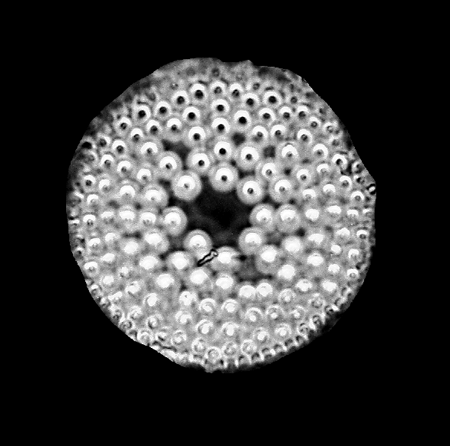
This is a dead diatom called Actinocyclus.
Here's one that is still alive!

But that's not the best part. There are some people who like diatoms so much they will PAY people to collect them and arrange them into pretty little shapes...
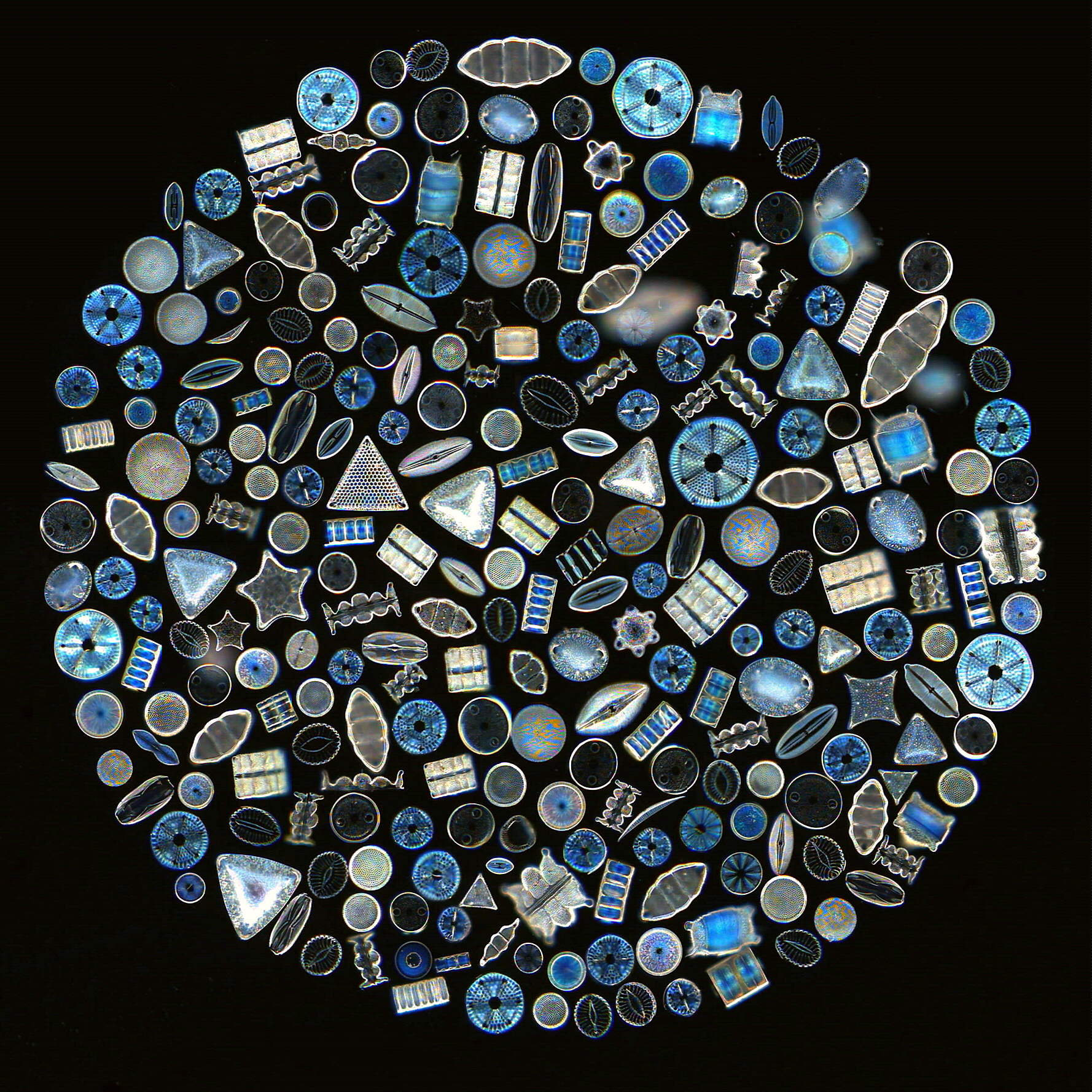
And some of these shapes get completely crazy


Wait, it gets better!


This last one is from the late 19th century when collectors first started commissioning and paying people for little arrangements of these single-celled plankton. This one actually has butterfly scales in it as well.
Isn't that crazy?! For Elements this year, I am planning on making an attempt at constructing my own diatom image. I'll let you know when that happens, of course!
You can take a full tour of cool diatom images here!
But I have one more before I go

Soooo COOL!
In the news this week...
The NY Times, in the Tuesday issue of the Science Times, reported on animal hybrids! Who doesn't love a cool hybridized animal or plant?
I'm sure that you've probably heard of things like ligers before, but have you ever seen a wolphin? or a Pizzly Bear? Zorse? Yeah, pretty neat, huh?

The Sea Life Park in Hawaii inadvertently created a cross between a dolphin and a false orca, calling it a wolphin. A hunter in Canada shot a huge white and brown bear with long claws and a hump on its back. Scientists later discovered that it was a polar bear-grizzly hybrid.

These kinds of animals exist all over the place and some of them aren't completely unnatural. Sometimes these hybridizations create an organism better capable of surviving in a new, changing environment. This can create completely new species! Speciation by hybridization might become a more prevalent occurrence in today's rapidly changing ecosystems, especially as habitats begin to overlap, allowing geographically isolated species to interact. This habitat overlap has caused the creation of Pizzly bears in the Arctic and Subarctic of Canada.
Keep your eyes open for more of this kind of thing in the future!
You can find the whole NY Times article here.
Thursday, September 16, 2010
Random Thought of the Day

Aren't they pretty?!
Wait, you don't think that's pretty? What about these?


Yeah? They're freaking ADORABLE!!! Too bad some of them (the cnidarian eating ones) incorporate whole nematocysts into their cerata. That means some of them steal the stinging parts of jellyfish and incorporate them into their own little tentacle-y things. No one knows how they do this, by the way. Think about this for a second; How on EARTH does this guy manage to grow the cells of a completely different animal in its own body? We humans have problems sharing blood with each other! These guys are literally stealing ORGANS from other animals! CRAZY!
Ok, you still don't think they're cute?
What about this one?

He's just so happy to see you!!!
Check out this AMAZING slideshow of nudibranch photos from National Geographic!
Sunday, September 12, 2010
Random Thought of the Day
What if you discovered an ancient tome that was so old, it was impossible to open and read its contents... How on Earth would you ever manage to discover the wealth of information hidden between its covers? Imagine all the discoveries and insight Man would miss out on...
Solution!!!
Just CT scan that shit!
Researchers at the University of Texas in Austin were granted permission to scan a book printed in 1584 by Pedro Orcharte of Mexico. They left the tome inside its protective case and scanned 782 pages using X-ray CT technology, allowing researchers to digitally open the book and read its contents without ever turning a page!

In case you didn't know, CT stands for computed tomography, which, in case you didn't know, is the process of scanning various 2D "slices" of a 3D object in order to visualize the whole object digitally. In the case of this ancient tome, each "slice" that the researchers scanned was a different set of pages. The x-rays used in the CT scan are reflected by the iron in the ink on each page allowing researchers to piece together the entire book one page at a time.
Now if only they could read Latin...
Check out some more info on this really cool scanning method HERE!
Subscribe to:
Posts (Atom)